Programs & Services
The South Central AIDS Education & Training Center (SCAETC) provides training in a wide range of fields and programs for HIV workforce development, clinical skills, practice transformation, oral health, interprofessional education, and more.
Clinical Consultations/ Capacity Building Assistance
Our SCAETC Local Partner Sites throughout the region provide education, training, consultation, and clinical decision support to health care providers, allied health professionals, and health care support staff who care for people with HIV and those at high risk of HIV.
Experts are then matched with these health care professionals to provide tailored education, clinical consultation, and technical assistance to support high quality, comprehensive care for people with or affected by HIV.
ECHO
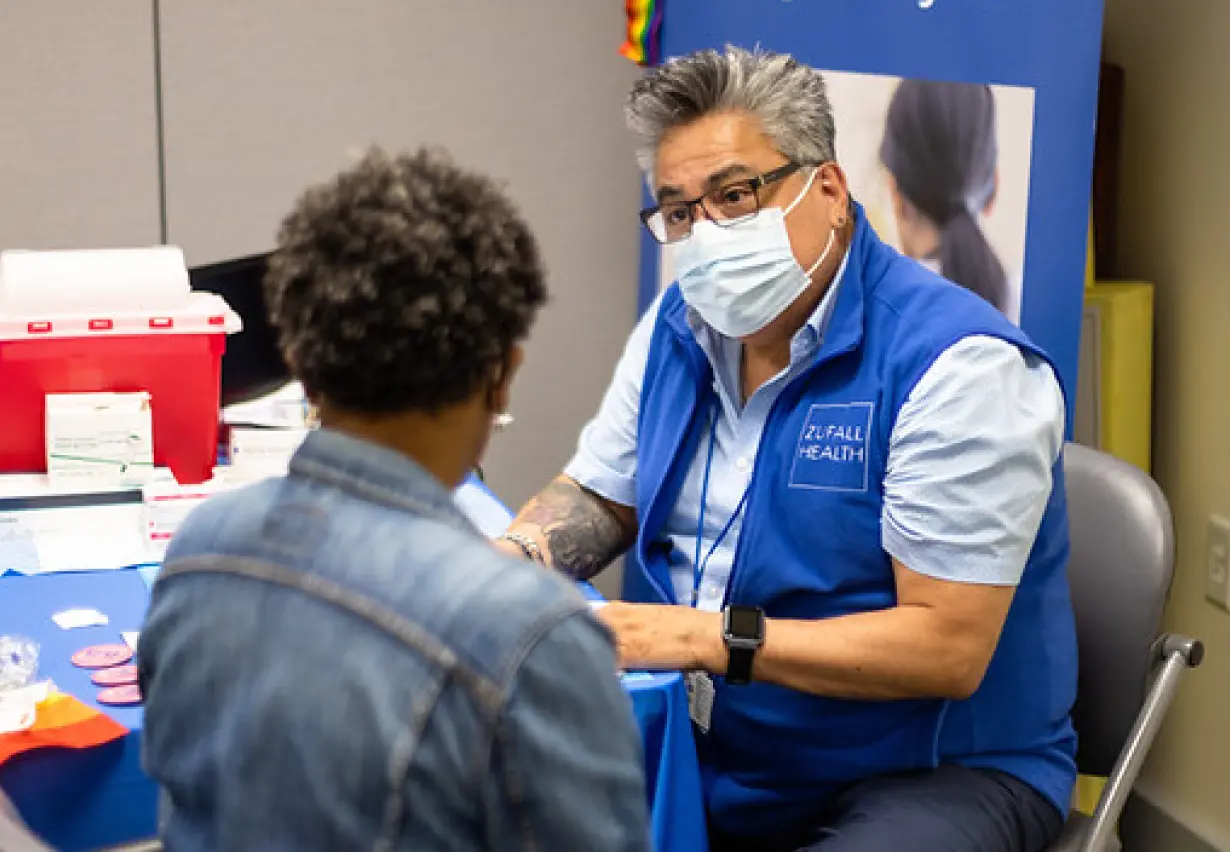
The SCAETC Central Office is located at the University of New Mexico Health Science Center ECHO Institute. The ECHO Institute trains partners in the ECHO Model™ to scale their own social initiatives. The ECHO Model is not traditional “telemedicine” where the specialist assumes care of the patient, but is instead telementoring, a guided practice model where the participating clinician retains responsibility for managing the patient.
Several partners within the SCAETC region use the ECHO Model, which connects groups of community providers with specialists at centers of excellence in regular real-time collaborative sessions. The sessions, designed around case based learning and mentorship, help local community members gain the expertise required to provide needed services.
The interprofessional team of academic and community experts both teach and learn from each other with the goal of increasing the knowledge, skills, and comfort level of providing best-practice care across diverse cultural and geographical contexts. As the capacity of the local workforce increases, lives improve.

HIV & Primary Care
The SCAETC provides training, technical assistance, and consultation to increase knowledge, skills and clinical capacity of health care providers and other members of the healthcare team to provide the highest quality HIV care and address outcomes along the Continuum of Care– earlier diagnosis, linkage to care, care maintenance and viral suppression. Our training also includes HIV prevention and management of comorbidities, such as sexually transmitted infections, viral hepatitis, substance use disorders, and behavioral health disorders. Trainings are offered in-person or virtually – both live and self-paced trainings – to primary care providers, HIV and non-HIV specialty care providers, and other members of the primary healthcare team with the goal of addressing National HIV/AIDS Priorities of enhancing prevention and testing, increasing access, and reducing disparities. Many trainings include continuing education credits at no cost to the participant.

Interprofessional Education (IPE)
The goal of the IPE program is to train the faculty of schools in the health profession, graduate departments, or other programs, to better equip them to teach their students to address the health care needs of People with HIV/AIDS (PWH) through interprofessional education and collaborative practice.
Our regional partners have programs and partnerships with accredited schools and graduate departments or programs of medicine, nursing, dentistry, public health, allied health, pharmacy and/or behavioral health to develop or enhance curricula, utilizing interprofessional team-based learning, to train faculty and build capacity to prepare future health care professionals to provide for the health care needs of PWH.
At the end of the program, students are encouraged to obtain HIV-focused professional certifications, and success is measured by the number of students that go on to provide HIV care upon completion of the program.

Oral Health
The SCAETC offers a wide array of workforce development programs. Training services include didactic presentations, interactive workshops, case discussions, preceptorships, consultations, technical assistance, and support regarding oral health and HIV.
The focus of this program is to train health practitioners to competently manage all aspects of oral health care and work inter-professionally to advance the best health outcomes for their clients living with HIV.
We provide trainings to dentists, dental hygienists, dental assistants and other clinical health providers in all practice settings including private practices, community health centers, hospital and long-term care. Trainings are offered in-person or virtually.
Trainings are customized to those with varied levels of expertise and can be specifically targeted to the individual or clinical site.

Practice Transformation
Practice Transformation (PT) is a process of facilitating change in a healthcare organization and delivery of primary care to advance quality improvement, patient-centered care and characteristics of high performing primary care. The SCAETC’s PT program partners with selected clinics across our region to improve patient outcomes along the HIV care continuum by integrating principles of the patient-centered medical home model and implementing HIV care and prevention services. The Practice Transformation process involves goal setting, workforce training, quality improvement and outcomes measurement, and adapting organizational tools and processes to support advances in models of team-based care. Coaches from local partner sites work directly with clinicians and administrative staff at healthcare organizations and clinics to achieve their self-identified PT goals.
Preceptorships
The SCAETC offers clinical preceptorship opportunities to healthcare providers who are interested in clinical experiences with expert providers in HIV prevention, treatment, and oral health care.
We encourage those who are interested in participating in a clinical preceptorship to review the AETC National HIV Curriculum so that you can get the most out of the clinical preceptorship experience.
Clinical preceptorships can be arranged in any of the five states in our region, and we have the capacity to provide longitudinal training opportunities in addition to more condensed observational experiences. Please contact the SCAETC Local Partner in your area to discuss a specialized preceptorship for you.
Viral Hepatitis
The field of Hepatitis C Virus (HCV) treatment is changing at a rapid pace with the advent of highly effective directly acting agents (DAAs); the challenges of treating co-infected patients can be challenging. Our understanding of hepatitis B (HBV) and the increasing cases of reactivation of hepatitis B with immunosuppression and treatment of hepatitis C has re-emphasized the importance of understanding about the diagnosis, prevention, and management of this infection. Although the primary mission of the AETCs is focused on HIV, viral hepatitis is increasingly important both independent of and related to HIV. Risk factors for acquisition of these viral infections is similar to HIV and management recommendation guidelines are frequently updated.
In-Person and Online Training Options
The SCAETC offers a wide range of training programs including didactic presentations, interactive workshops, case discussions, preceptorships, consultations, technical assistance. Trainings are offered in-person or virtually – both live and self-paced trainings. Trainings are customized to those with varied levels of expertise and can be specifically targeted to the individual or clinical site. Please browse our Training calendar to find events happening in your area.
Additional Online Trainings Include: The AETC National Hepatitis C Curriculum